
Your data and privacy
Trusted processing: the lock and the key
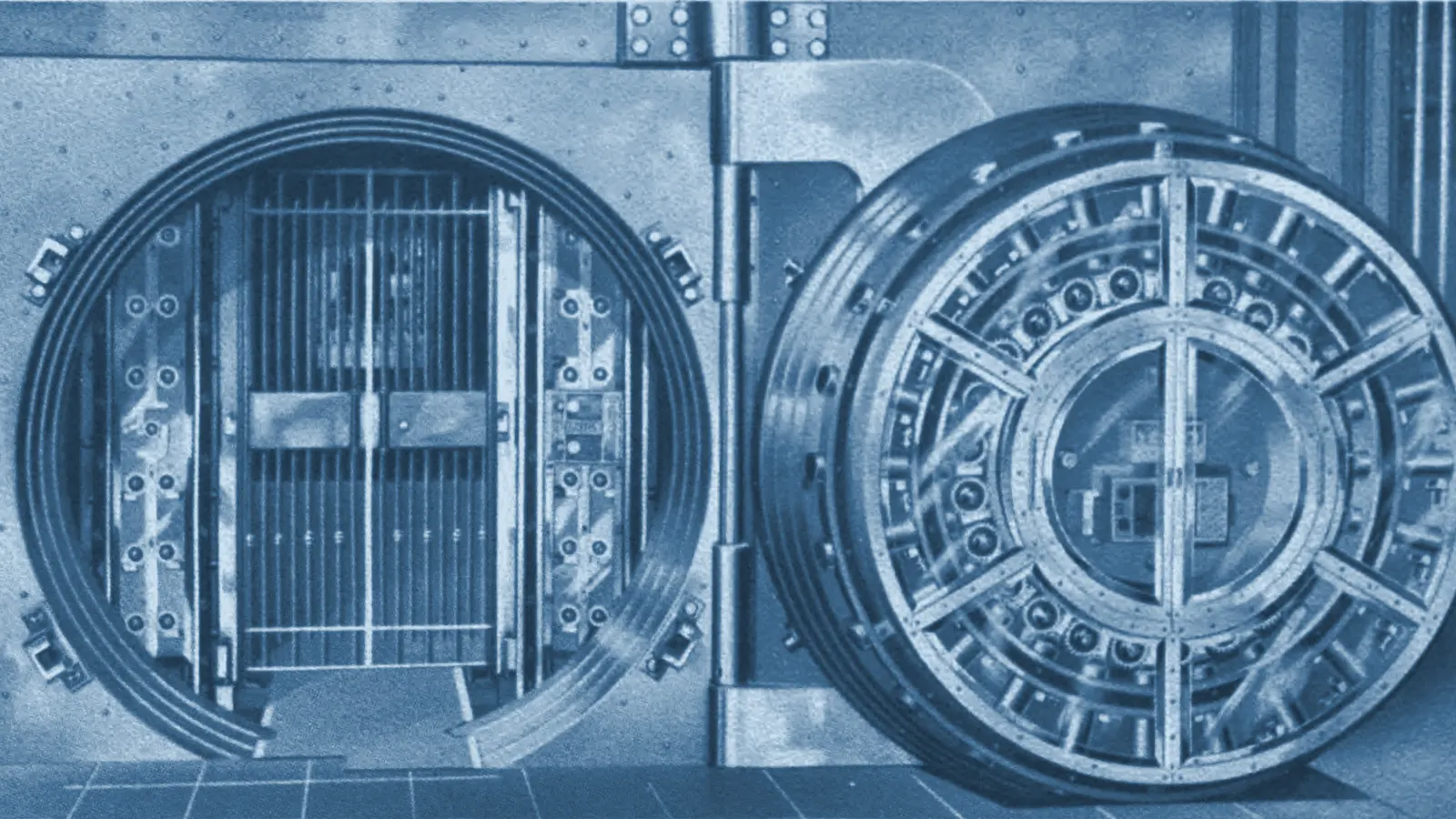
Your evidence is only ever processed inside hardware-sealed vaults that no person can open — and you don't have to take that on faith, because the vault proves what it is before any data enters.
One verification, start to finish
Follow one verification through the system. Your data is locked on your device, travels sealed, is opened only inside a vault whose key is forged in the hardware itself, and is destroyed once the answer exists. Only the answer leaves.
What a trusted processing unit is
A trusted processing unit is a vault built out of the computer's own hardware. The technical names are trusted execution environments and confidential virtual machines — AMD SEV-SNP, Intel SGX and AWS Nitro are the three the system supports. Inside one, the processor itself encrypts the memory, so even the machine's owner, looking at their own hardware, sees only ciphertext.
Ordinary servers have doors: an administrator account, a debug console, a memory dump. A trusted processing unit is designed with no doors at all — no operator login, no console, no way to read the memory from outside. That is not a policy that someone promises to follow; it is how the silicon works.
The gate: attestation, checked on-chain
Before your encrypted evidence is released to a vault, the vault must prove what it is. It produces an attestation — a signed statement from the hardware manufacturer's own certificate chain that says, in effect: "I am genuine sealed hardware, and I am running exactly this code, with this fingerprint."
The VirtEngine chain verifies that attestation on-chain, in its
x/enclave module, checking the signature and comparing the code's
measurement — a cryptographic fingerprint of every byte the vault will run — against
the approved record. If a single byte of the code were different, the fingerprint would
not match and no data would be released to it. Because the check is
on-chain, it is public: anyone can confirm which enclave measurements the network
accepts.
What attestation does and does not prove
Attestation proves the vault is genuine hardware running exactly the approved code — nothing more. The rest of the protection comes from what that approved code does: verify, report a result, destroy the evidence. Both halves are open source, so both halves can be checked.
The key: forged inside the vault
The key that decrypts your evidence never exists outside the vault. It is derived inside the hardware, from the hardware — the processor's own secrets — and sealed so it can only ever be used by that exact vault running that exact code (hardware key derivation with vTPM sealing, in the technical terms).
This is why "no one can open it" is a design fact rather than a promise: there is no key to hand over. Not to an operator with root access, not to the provider hosting the machine, not to the foundation that stewards the project, not in response to a demand. A key that never leaves the silicon cannot be copied, stolen, or surrendered.
What happens to your data, stage by stage
Original document images stay on the user's device. The local client derives approved verification data; only a minimum encrypted payload may enter VEID processing.
- Stage 1 Captured On your phone: document scan, selfie, liveness.
- Stage 2 Original stays local The document image never leaves your device. OCR and checks run locally.
- Stage 3 Derived data, if approved Only minimum user-approved fields may leave, encrypted for VEID processing.
- Stage 4 Transient data cleared Temporary processing data is cleared under the scope lifecycle; source images remain local.
- Stage 5 Selective result The network records the verification result and required encrypted references, never source images.
| Stage | Where it happens | Who can access your data | What remains afterwards |
|---|---|---|---|
| 1 · Capture | Your phone | Only you | Nothing has left your device yet |
| 2 · Encryption | Your phone | Only you and your local wallet client | Original document image stays local; no scan is transmitted |
| 3 · Attested processing | VEID processing, only for approved derived data | As stated in the relevant scope and trusted-processing design | Only the approved derived fields/features are submitted; never the source scan |
| 4 · Destruction | Transient VEID processing data | According to the approved scope lifecycle | Transient processing data is cleared under that lifecycle; source document images never entered the network |
| 5 · Result | The VirtEngine chain | Services you consent to, per request | Verification result and required encrypted references — never source document images |
How and when data is discarded
Destruction is a commitment in the published Biometric Data Addendum, with actual figures rather than adjectives:
- On your device: original document images remain local and are never uploaded. Local OCR and document checks produce only the derived data you review.
- Approved derived data: if you submit a scope, its notice states what encrypted derived data is sent, who processes it, and the applicable lifecycle. It never includes the original document image.
- On deletion request: requests apply to data the network actually received. Original document images remain on your device and are controlled there.
- Encrypted network data: deletion and key-destruction limits are explained in the relevant scope notice, including any immutable on-chain records.
- Withdraw at any time by emailing dpo@virtengine.com.
Who can see what
| Data | You | Service you use | Providers | Foundation | Operators |
|---|---|---|---|---|---|
| Raw documents | Yes — on your device | Never | Never | Never | Never |
| Biometric data | Yes — on your device | Never | Never | Never | Never |
| Encryption keys | Held in your phone's hardware | Never | Never | Never | Never — the vault's key never leaves the silicon |
| Score and tier | Yes — in full | Only with your consent, per request | Tier only, as an approved client | Public results only | Public results only |
"Never" for raw documents is architectural: the source image remains on your device and is not transmitted. The scope notice describes any derived data that is separately approved.
Verification you can check
Every claim on this page maps to something inspectable. The enclave runtime and the
attestation verifier are in the
open-source repository
(pkg/enclave_runtime); the on-chain verification lives in the
x/enclave module; the destruction and retention commitments are in the
versioned Biometric Data Addendum. The
protocol documentation covers the attestation
formats in engineering detail.
The honest limits
No security design is beyond all conceivable failure, and we do not claim this one is. What we claim — checkably — is the design: attestation verified before data moves, keys sealed in hardware, no operator access path, and destruction commitments with dates attached. Designed so that no one — not operators, not providers, not the foundation — can open the processing environment.